


Capital Gains Tax in Turkey
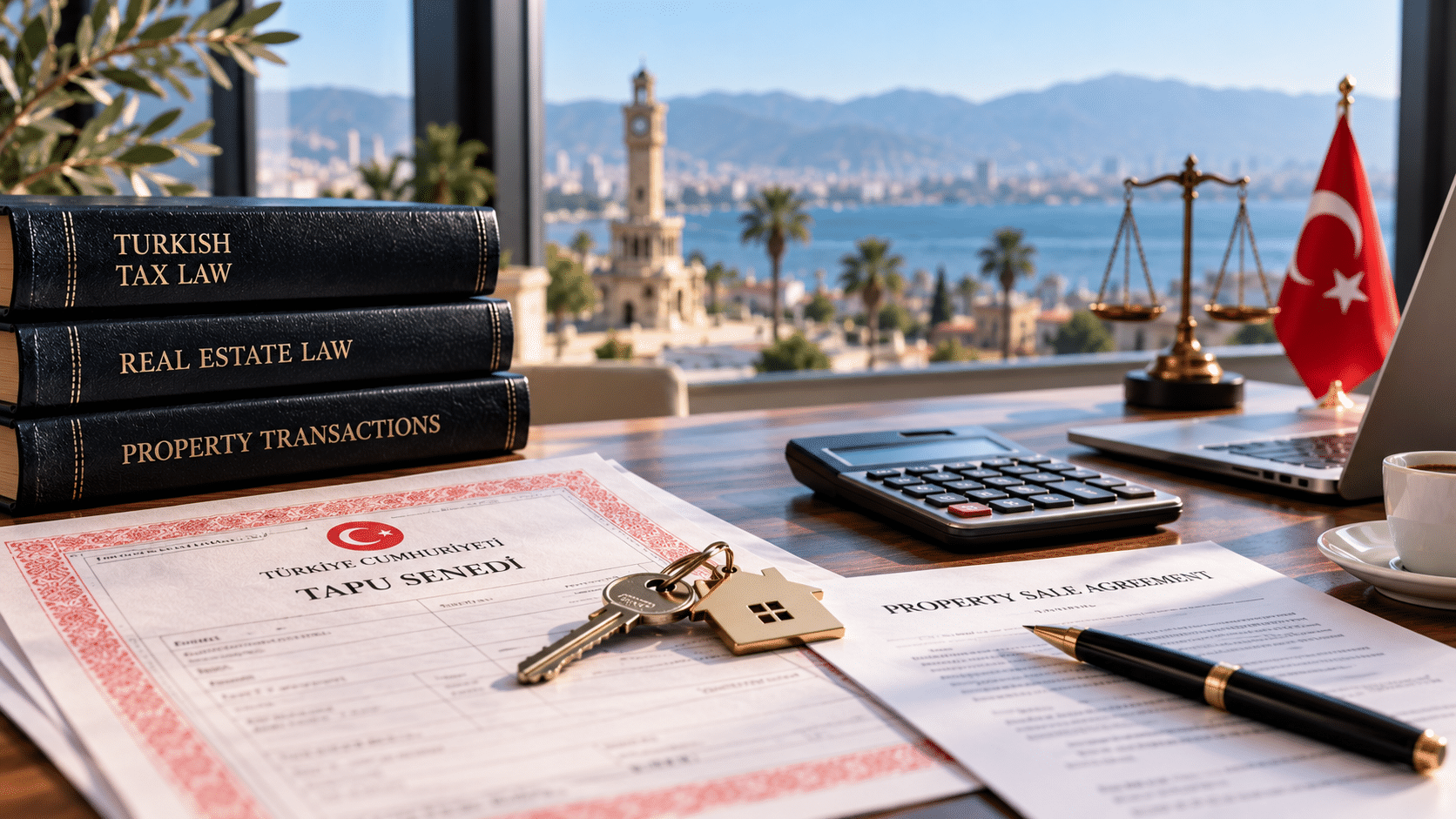
Capital gains tax on property sales in Turkey
Selling a property in Turkey may have tax consequences, particularly if you sell it within five years of acquiring it. For foreign property owners, understanding the Turkish capital gains tax rules before completing a sale can help avoid unexpected liabilities and make it easier to estimate the net proceeds.
The tax treatment depends on how the property was acquired, when it was acquired, the gain calculated under Turkish tax rules and the seller’s individual circumstances.
At E&G International Law Firm, we assist international clients with Turkish real estate transactions and related legal matters, including title deed transfers and cross-border property sales.
Table of Contents
Is Capital Gains Tax Payable When Selling Property in Turkey?
For individuals, a gain arising from the sale of certain real estate acquired for consideration may be subject to Turkish income tax if the property is sold within five years of its acquisition.
The five-year period is calculated by calendar days. It is important to establish the legally relevant acquisition date rather than relying only on the date a purchase agreement was signed.
If the property is sold after the five-year period has elapsed, the gain will generally fall outside the individual capital gains tax rules applicable to this type of property disposal. However, different rules may apply where the transaction forms part of a commercial activity or the property belongs to a business.
The specific circumstances should be reviewed before assuming that a sale is tax-free.
How Does the Five-Year Rule Work?
The five-year rule generally applies to real estate acquired for consideration, such as a residential apartment, house or plot of land.
For example, if an individual purchases an apartment in Turkey and sells it before five years have elapsed, the gain may be taxable. If the same individual sells the property after the five-year period, the gain will generally not be taxable under these particular capital gains provisions.
The acquisition date is normally the date of registration in the land registry. In certain circumstances, where the property was actually delivered for use before registration, the earlier date may be relevant if the applicable conditions are met and the date can be substantiated.
Special attention is required for properties acquired through construction arrangements, including certain transactions involving land-for-construction agreements.
What If You Inherited the Property?
Property inherited from a deceased person is generally treated differently from property purchased for consideration.
Under Turkish income tax rules, gains from the disposal of property acquired without consideration, including through inheritance, are generally outside the capital gains tax provisions that apply to property sold within five years.
This distinction can be particularly important for foreign heirs who inherit real estate in Turkey and later decide to sell it.
However, the fact that capital gains tax may not apply does not mean that every tax or administrative obligation is eliminated. Inheritance-related taxes, land registry procedures and other requirements should be considered separately where applicable.
How Is the Taxable Gain Calculated?
Where a property sale is taxable, the amount subject to tax is not necessarily the difference between the original purchase price and the sale price.
The calculation generally takes into account:
- The sale proceeds.
- The property’s acquisition cost, adjusted where the statutory indexation conditions are met.
- Eligible expenses borne by the seller in connection with the sale.
- Relevant taxes and fees paid by the seller.
- The annual exemption applicable to the relevant tax year.
Under the Turkish rules, acquisition cost indexation may be available where the increase in the Domestic Producer Price Index (Yİ-ÜFE) meets the statutory threshold, generally at least 10% under the applicable calculation.
The resulting taxable gain must be calculated using the rules applicable to the relevant tax year. The amount of the annual exemption also changes over time.
For this reason, a reliable calculation should be based on the acquisiti
on date, acquisition price, sale date, sale price and supporting expense documents.
Do Foreign Property Owners Have to Pay Turkish Tax?
Foreign nationality alone does not determine whether Turkish tax is payable.
The result may depend on the type of income, the circumstances of the sale, the seller’s tax status and any applicable provisions of a double taxation agreement.
A foreign owner should not assume that living outside Turkey automatically removes Turkish tax obligations relating to Turkish real estate.
It may also be necessary to consider tax reporting obligations in the seller’s country of residence. The treatment of the same transaction abroad will depend on that country’s domestic law and any relevant tax treaty.
Where the seller is a foreign tax resident, both Turkish tax rules and the potential treatment in the country of residence should be considered.
When Must Capital Gains Tax Be Declared and Paid?
Where a taxable gain must be declared, the applicable annual income tax return and payment deadlines should be checked for the relevant tax year.
The calculation and reporting requirements may differ depending on the nature of the income and the seller’s circumstances.
Sellers should retain documents supporting the transaction, including the title deed records, purchase and sale documentation, evidence of acquisition cost, eligible expenses and relevant tax or fee payments.
Keeping complete records can make the tax calculation and any subsequent review considerably easier.
For official guidance, consult the Turkish Revenue Administration (Gelir İdaresi Başkanlığı): https://gib.gov.tr/
What Should You Check Before Selling Your Property?
Before completing a sale, foreign property owners should consider the following steps:
- Confirm the property’s legally relevant acquisition date.
- Establish whether the property was purchased, inherited or acquired through another arrangement.
- Calculate the potential gain under the applicable Turkish rules.
- Check whether acquisition cost indexation and an annual exemption may apply.
- Gather supporting documents for the acquisition price and eligible expenses.
- Confirm any tax declaration and payment obligations.
- Consider whether the sale also creates reporting obligations in the seller’s country of residence.
A review before completion can help the owner understand the potential tax exposure and plan the sale more effectively.
Legal Assistance for Foreign Property Owners
Selling property in Turkey can involve more than signing the title deed transfer documents. Tax consequences, ownership records, powers of attorney and international payment arrangements may all require attention.
E&G International Law Firm assists foreign individuals and international clients with Turkish property transactions, title deed procedures and related legal matters.
If you are considering selling a property in Turkey, we can help review the legal aspects of the transaction and identify issues that may need to be addressed before completion.
Contact E&G International Law Firm to discuss your Turkish property sale and the legal procedures relevant to your circumstances.
This article provides general information and does not constitute legal or tax advice. Tax treatment depends on the facts of each case and the legislation applicable to the relevant tax year. Individual advice should be obtained before relying on a particular tax outcome.