


Certificate of Inheritance in Turkey for Foreign Heirs
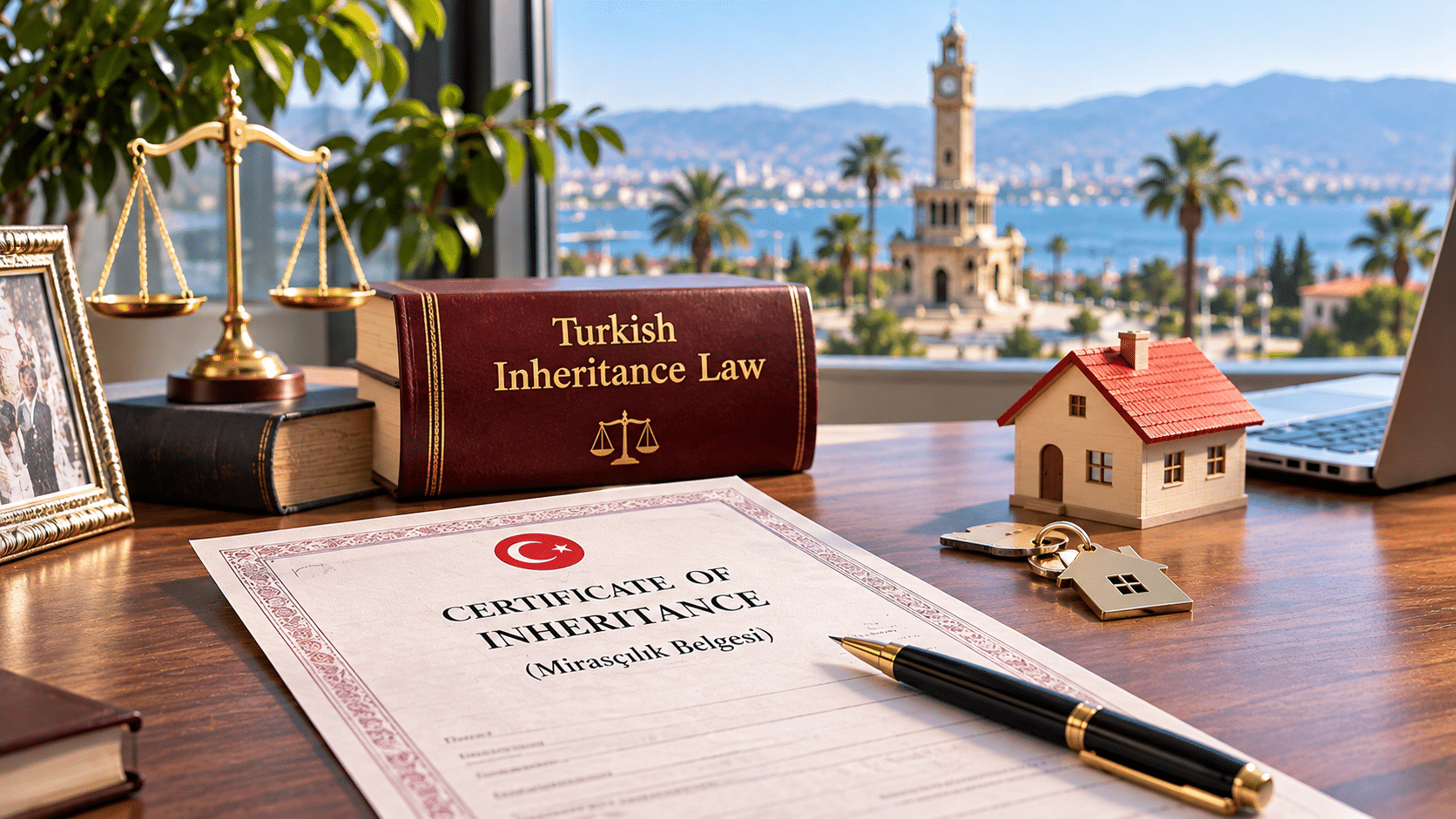
Certificate of inheritance in Turkey for foreign heirs
If a family member has passed away leaving property, money or other assets in Turkey, you may need a Turkish certificate of inheritance to claim your legal rights.
For foreign heirs, obtaining this document can involve additional legal and administrative steps. Documents issued abroad may need to be authenticated and translated, and the applicable inheritance law must be established before the competent Turkish court.
At E&G International Law Firm, we assist foreign individuals and families with inheritance proceedings in Turkey, including obtaining certificates of inheritance, transferring inherited property and recovering inherited assets.
Table of Contents
1. What Is a Certificate of Inheritance in Turkey?
A certificate of inheritance, known in Turkish as a mirasçılık belgesi or veraset ilamı, is an official document identifying the legal heirs of a deceased person and their respective inheritance shares.
It is commonly required when dealing with inherited assets in Turkey, including:
- Real estate and land registered in Turkey.
- Bank accounts and deposits.
- Shares and other financial assets.
- Other rights and assets forming part of the estate.
The certificate establishes who is entitled to inherit and in what proportions. However, it does not automatically transfer ownership of a property or release money held in a bank account. Separate procedures must be completed with the relevant authorities and institutions.
2. Can Foreign Citizens Obtain a Certificate of Inheritance in Turkey?
Yes. Foreign nationality does not, by itself, prevent a person from inheriting assets in Turkey or applying for a certificate of inheritance.
Foreign heirs may apply to the competent Turkish Civil Court of Peace (Sulh Hukuk Mahkemesi) to establish their inheritance rights.
Under Turkish legislation, notaries do not have authority to issue certificates of inheritance in cases involving foreign nationals within the scope of the relevant statutory restrictions. Therefore, foreign heirs generally need to follow the court procedure.
The court examines the deceased’s identity, family relationships, supporting documents and the applicable inheritance law before determining the heirs and their shares.
3. Which Country’s Inheritance Law Applies?
One of the most important issues in international inheritance cases is determining which country’s law governs the succession.
Under Article 20 of Turkish Private International and Procedural Law No. 5718 (MÖHUK), succession is generally governed by the national law of the deceased.
However, Turkish law applies to immovable property located in Turkey, regardless of the deceased person’s nationality.
This distinction can be important where a foreign national dies owning an apartment, house or land in Turkey.
For example, if a German citizen dies leaving an apartment in Izmir, the applicable foreign inheritance law may need to be examined when determining succession rights. However, Turkish law governs the immovable property situated in Turkey and the relevant land registry procedures.
Consequently, an international inheritance matter may require the examination of both Turkish law and the law of the deceased person’s country of nationality.
4. What Documents Are Required from Foreign Heirs?
The documents required depend on the deceased person’s nationality, the heirs’ family relationships, the country where the documents were issued and the assets involved.
Commonly requested documents include:
- Death certificate of the deceased.
- Birth certificates establishing the relationship between the deceased and the heirs.
- Marriage certificate, where the surviving spouse is an heir.
- Divorce or adoption records, where relevant.
- Passports or identity documents of the heirs.
- Family register or other official records identifying family relationships.
- Will or inheritance agreement, if applicable.
- Documents establishing the applicable foreign inheritance law, where necessary.
The court may request additional evidence depending on the circumstances.
Apostille and Certified Turkish Translation
Documents issued by foreign authorities generally need to be authenticated before they can be used in Turkish legal proceedings.
Depending on the issuing country and applicable international agreements, this may involve:
- An apostille under the Hague Apostille Convention; or
- Consular legalisation or another applicable authentication procedure.
The documents must also be translated into Turkish in accordance with the requirements of the relevant Turkish authority or court.
It is particularly important to ensure that names, dates of birth, family relationships and other personal details are consistent across all documents. Differences in spelling, transliteration or surname changes can cause delays and lead to requests for additional evidence.
5. Can You Use a Foreign Certificate of Inheritance in Turkey?
A certificate of inheritance or probate document issued by a foreign authority is not automatically sufficient to transfer assets in Turkey.
For Turkish land registry transactions, foreign heirs will generally need a Turkish certificate of inheritance or another legally sufficient Turkish court decision, depending on the circumstances.
Foreign probate documents and inheritance records can nevertheless be important evidence. They may help establish the family relationships, the deceased person’s legal status and the applicable foreign inheritance rules.
Whether a particular foreign document can be used directly, or whether a separate Turkish court procedure is necessary, must be assessed according to the nature of the document and the asset concerned.
6. Can You Obtain a Certificate of Inheritance Without Travelling to Turkey?
In many cases, yes.
Foreign heirs do not necessarily need to travel to Turkey personally to initiate and conduct inheritance proceedings.
They may appoint a Turkish lawyer through a properly issued power of attorney. The power of attorney can generally be arranged through a Turkish consulate abroad or before a competent foreign notary, subject to the applicable authentication and translation requirements.
The authority granted should cover the specific legal procedures required, including applying for a certificate of inheritance and representing the heir before the relevant Turkish authorities.
This arrangement can be particularly useful for heirs living in the United Kingdom, Germany, the United States and other countries who need to deal with assets in Turkey.
7. What Happens After Obtaining the Certificate of Inheritance?
Obtaining the certificate is often only the first stage of the inheritance process.
Depending on the assets forming part of the estate, further procedures may be required.
Transferring inherited real estate
Where the deceased owned property in Turkey, the heirs generally need to complete the inheritance registration procedures before the relevant Land Registry Directorate (Tapu Müdürlüğü).
The title deed records must be updated to reflect the heirs’ ownership rights and shares.
Foreign heirs should also be aware that inheritance rights and the ability to retain a particular property are separate legal questions. Restrictions applicable to foreign ownership of real estate may need to be examined in certain cases.
Claiming inherited bank accounts
Where the deceased held bank accounts or deposits in Turkey, the heirs must submit the required inheritance documents to the relevant bank.
The bank may request the Turkish certificate of inheritance, identity documents, tax-related documents and other supporting information before releasing the funds.
Selling inherited property
Once the necessary inheritance and title deed procedures have been completed, the heirs may consider selling the inherited property.
Where several heirs own the property jointly, their respective rights and the legal requirements for the sale must be examined. A properly authorised representative may be able to complete the relevant procedures on behalf of heirs living abroad.
8. How Long Does It Take to Obtain a Certificate of Inheritance?
The duration depends on the complexity of the inheritance matter and the completeness of the supporting documents.
Straightforward applications with complete and consistent documentation may proceed more efficiently.
However, proceedings involving foreign nationals may take longer where the court needs to obtain additional information, examine foreign inheritance law, verify family relationships or request further documents from foreign authorities.
Preparing the documentation carefully before filing the application can help reduce unnecessary delays.
9. Why Should Foreign Heirs Work with a Turkish Inheritance Lawyer?
International inheritance cases often involve more than one legal system and several administrative authorities.
A Turkish inheritance lawyer can assist with:
- Determining the applicable inheritance law.
- Preparing and filing the application for a certificate of inheritance.
- Reviewing foreign death, birth and marriage certificates.
- Coordinating apostille, legalisation and translation procedures.
- Representing foreign heirs before Turkish courts.
- Transferring inherited real estate through the Land Registry.
- Claiming inherited bank deposits and other assets.
- Arranging the sale or division of inherited property.
- Coordinating with foreign lawyers and probate representatives.
Professional legal assistance can be particularly valuable where heirs live in different countries or the estate includes several types of assets.
Inheritance Legal Services for Foreign Heirs in Turkey
E&G International Law Firm provides legal assistance to foreign individuals and families dealing with inheritance matters in Turkey.
We assist clients with obtaining certificates of inheritance, establishing inheritance rights, transferring inherited property, claiming bank assets and managing the sale or division of inherited assets.
Our firm can also represent overseas heirs through powers of attorney, allowing many inheritance procedures to be handled in Turkey without requiring the client to travel.
If you are a foreign heir and a family member has left property, bank accounts or other assets in Turkey, contact E&G International Law Firm to discuss your inheritance matter.
E&G International Law Firm – Turkish Inheritance Law Services for Foreign Clients.
This article provides general legal information and does not constitute legal advice. The applicable inheritance law and procedural requirements depend on the nationality of the deceased, the identity of the heirs, the nature and location of the assets and the circumstances of the case.